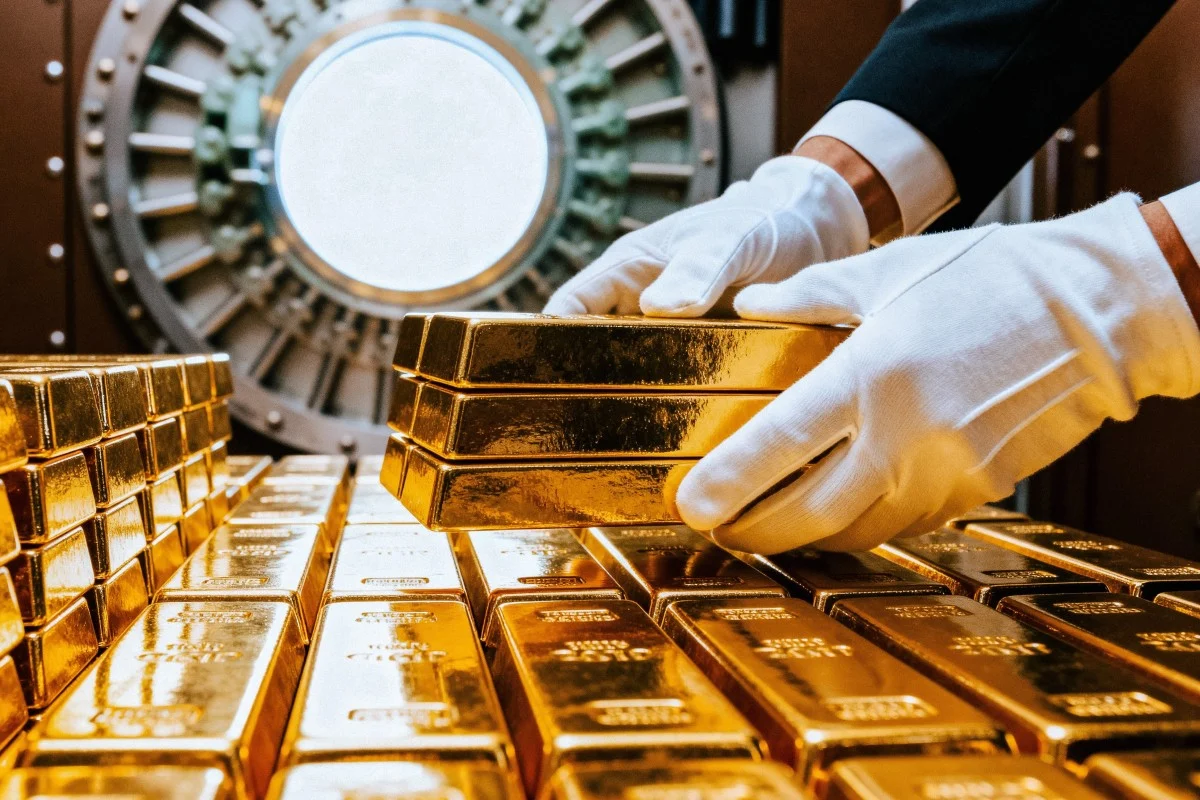
Global gold trading hub status attracts industry leaders to set up operations in Hong Kong
2026-10-26
City gears up for comprehensive precious metals ecosystem with greater storage, central clearing system and potential tax incentives
Investment in gold – long considered a traditional safe-haven during uncertain times – is taking on renewed importance amid the current global geopolitical uncertainty, market volatility and shifting confidence.
For Hong Kong, this surge in interest comes as it is increasing its effort to become an international gold trading centre – a role that builds on its strengths as an international centre for finance, legal services, logistics and its connection with mainland China.
The city’s government has set out plans to increase its total gold storage capacity by more than 10 times to over 2,000 tonnes (1,970 tons) by 2030. It has also been expanding the market infrastructure needed to support larger trading volumes, including the establishment of a central clearing and settlement system for gold, which will be officially launched early next year.
Hong Kong Chief Executive John Lee Ka-chiu stressed the importance of the city speeding up the development of an international gold trading market in last month’s policy address. He also raised the subject in his inaugural five-year plan for the city, which saw him vow to establish “a commodity trading ecosystem with gold as an entry point” through a range of coordinated efforts.
To accelerate the momentum, the government will halve the profits tax rate for qualifying physical commodity traders from the standard 16.5 per cent to 8.25 per cent by next year, while the city’s Exchange Fund – the reserve used to defend the local currency – will also increase its gold portfolio.
Hong Kong is also strengthening cross-border links. It has been expanding access to the mainland’s gold market through a cross-border gold settlement agreement with Shanghai, while also signing a memorandum of understanding with Shenzhen to jointly develop gold processing and trading. Another agreement with the Southeast Asian nation of Laos aims to foster gold market cooperation and create a gold corridor linking producers, refiners, traders and investors.
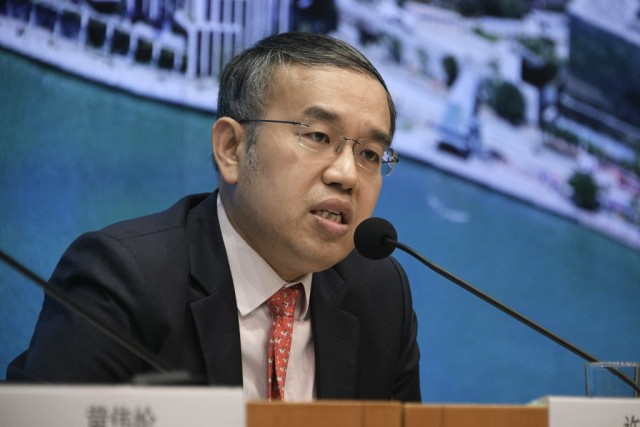
Benjamin Wong, head of transport, logistics and industrials at InvestHK, the government’s foreign investment promotion agency, says the growing interest in gold and the city’s new cross-border agreements reflect a broader shift in the importance of China and Asia within the global economy.
“While much attention is rightly on China’s remarkable growth, we should not overlook the rise of Asia as a collective economic powerhouse,” he says.
“Twenty years ago, Hong Kong was already a premier international financial centre. Today, the region’s overall economic strength has expanded dramatically. Anchored by the Chinese mainland and connected to the world, Hong Kong is uniquely positioned to offer a very compelling global alternative as a regional gold hub.”
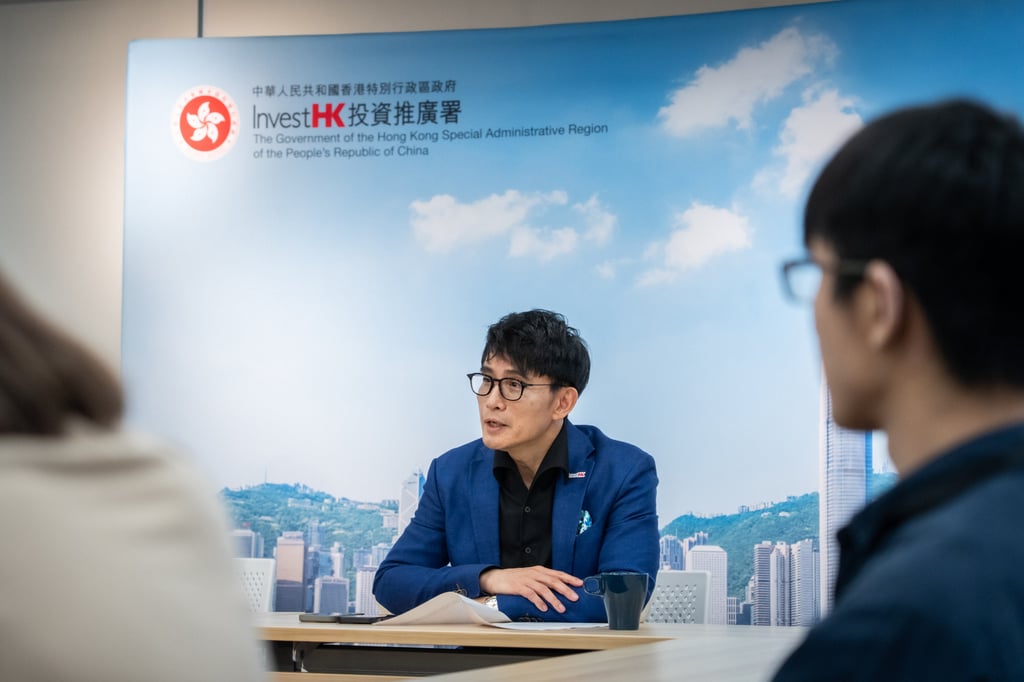
Benjamin Wong, head of transport, logistics and industrials at InvestHK, says enhancing Hong Kong’s capabilities in processing and storing gold will be crucial for building a robust gold ecosystem.
Gold’s appeal has also increased as some central banks and investors consider reallocating assets away from US dollar-denominated holdings. But diversification is not only about buying gold, but also about where it is stored, traded and settled, Wong says.
“If gold is still placed in London or New York, then diversification is only half done,” he says, adding that Hong Kong provides another option – one that connects with both the renminbi and the mainland gold market.
However, Hong Kong’s goal of building a complete trading infrastructure will not be achieved through one facility or one policy alone. The central clearing and settlement system will serve as a “centrepiece” of a gold ecosystem that makes trading in gold in Hong Kong faster, safer and cheaper for institutional investors.
That ecosystem is starting to take shape in the city with the arrival of companies such as Chow Tai King, a Shenzhen-headquartered jewellery brand that is using Hong Kong as the first step in its international expansion.
The company began as a jewellery processing factory in 1997 and set up its own brand and retail operations in 2000. Nelson Yan, CEO of Chow Taiking Securities (Hong Kong), the company’s securities business, says that it now operates about 1,500 retail outlets across China, with an additional shop in Tokyo, Japan.
Last year, Chow Tai King launched its Hong Kong operations as an offshore headquarters. Its local team, based in Kwun Tong, has about 20 staff covering brand operations, international business, securities-related work and refinery operations.
It is also building a gold refinery in Hung Hom, Kowloon. The 4,000 square metre facility, which is expected to begin operations later this year, will have an annual capacity of about 80 tonnes. It will focus on gold refining, testing and quality control, but also have the potential to process silver and other precious metals in future.
Chow Tai King also aims to open a showroom in the city next year. Once the Hong Kong operations are up and running, it plans to expand into Malaysia, Thailand and other Southeast Asian countries.
Since Chow Tai King moved to Hong Kong, InvestHK has provided comprehensive guidance on the city’s industry policies and business environment, which has allowed the company to turn these insights into something actionable.
The government agency also serves as the primary contact for companies that are investing in gold refining operations to capitalise on Hong Kong’s growing gold trading ecosystem. It works closely with key government bodies, including the Development Bureau, Lands Department, Buildings Department and Fire Services Department, to speed up approvals and site clearance for related facilities.
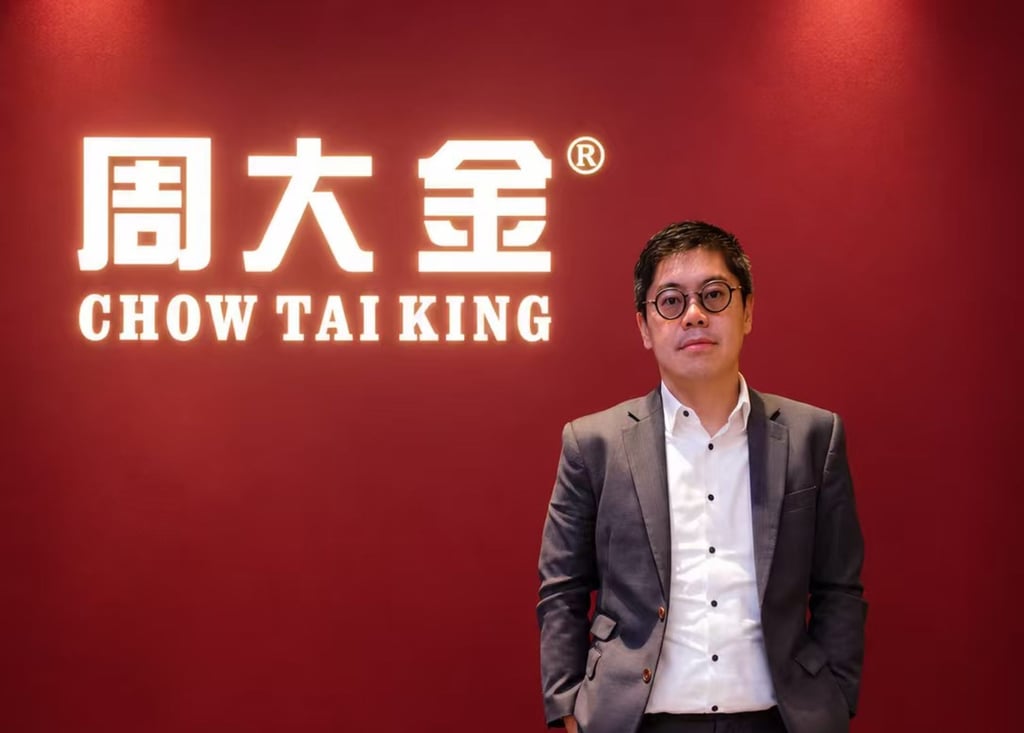
Nelson Yan, CEO of Chinese jewellery brand Chow Tai King’s securities business, Chow Taiking Securities (Hong Kong), says InvestHK’s insights and assistance have helped his company build its foundation in Hong Kong.
“InvestHK helped us understand the regulatory requirements and the critical preparations we needed to make so our refinery business could develop and run smoothly,” Yan says, noting that this partnership will be equally vital for the company’s next phase of growth.
“Once we are ready to further expand to Southeast Asia, we’ll also consult with them and leverage their knowledge and connections within the region to help facilitate the process,” he says.
InvestHK helps companies such as Chow Tai King not only liaise with numerous government departments to ease their business operational needs and understand possible government incentive packages and cost-saving schemes, but also introduces them to relevant stakeholders.
Another example is Point Gold International, the Hong Kong subsidiary of Point Gold, a leading mainland precious metals supplier and refiner headquartered in Shenzhen. InvestHK recently facilitated the establishment of its 10,000 square metre precious metals refinery in Tai Po, which is expected to be completed by the end of this year. Its Hong Kong headquarters is also scheduled to open at around the same time.
While mainland gold companies are increasingly interested in setting up operations in Hong Kong, industry players such as financial institutions must also show their support for the city if it is to realise its gold ambitions.
One example is HSBC’s recent decision to expand its physical gold storage capacity in Hong Kong to about 200 tonnes over the next few months. The bank says Asia accounts for about 60 per cent of global physical gold demand, with significant contributions from the mainland, India and other Asian markets.
China’s position as both a major gold miner and consumer market has created a need for a trusted, internationally-connected trading hub located nearby.
Cheuk Wong, HSBC’s head of macro trading in Asia and head of markets and securities services in Hong Kong, says: “Hong Kong’s success in strengthening its position as an international financial and gold trading hub will be highly valuable in connecting mainland Chinese producers with the global market.”
He says that the city’s banking infrastructure has historically been strong across a range of services, from trading and financing to risk management. With the recent pilot launch of the central clearing and settlement system for gold, the city is expanding into clearing, custody and cross-border settlement services at one location. The ecosystem will provide access to precious metals buyers and investors from across the globe when it is fully operational.
Benjamin Wong says that a robust gold ecosystem must, in addition to introducing gold companies to Hong Kong and helping them leverage the city’s status as a global financial centre to expand abroad, also include elements such as refining, vaulting, logistics, trading desks, recycling, technology and professional services.
InvestHK will continue to work with its worldwide satellite offices to promote Hong Kong’s increasing gold trading and processing capabilities as more industry leaders from the mainland arrive in the city with advanced technology and facilities, he says.
“Hong Kong’s value as a superconnector is not just a slogan,” he says. “The underlying strength of our financial system, our backing from the mainland market, and connectivity with the mainland and the rest of the world is unique for building up a strong gold ecosystem.”
Sources: SCMP